
The yearly shape of solar
The twin cities give strong generation from spring into early summer, a dip during monsoon cloud and rain, a recovery in autumn, and the softest months in mid winter when days are short and fog sits over Rawalpindi. Across the whole year, a well placed kilowatt still averages roughly 120 to 150 units a month.
Why monsoon is not all bad
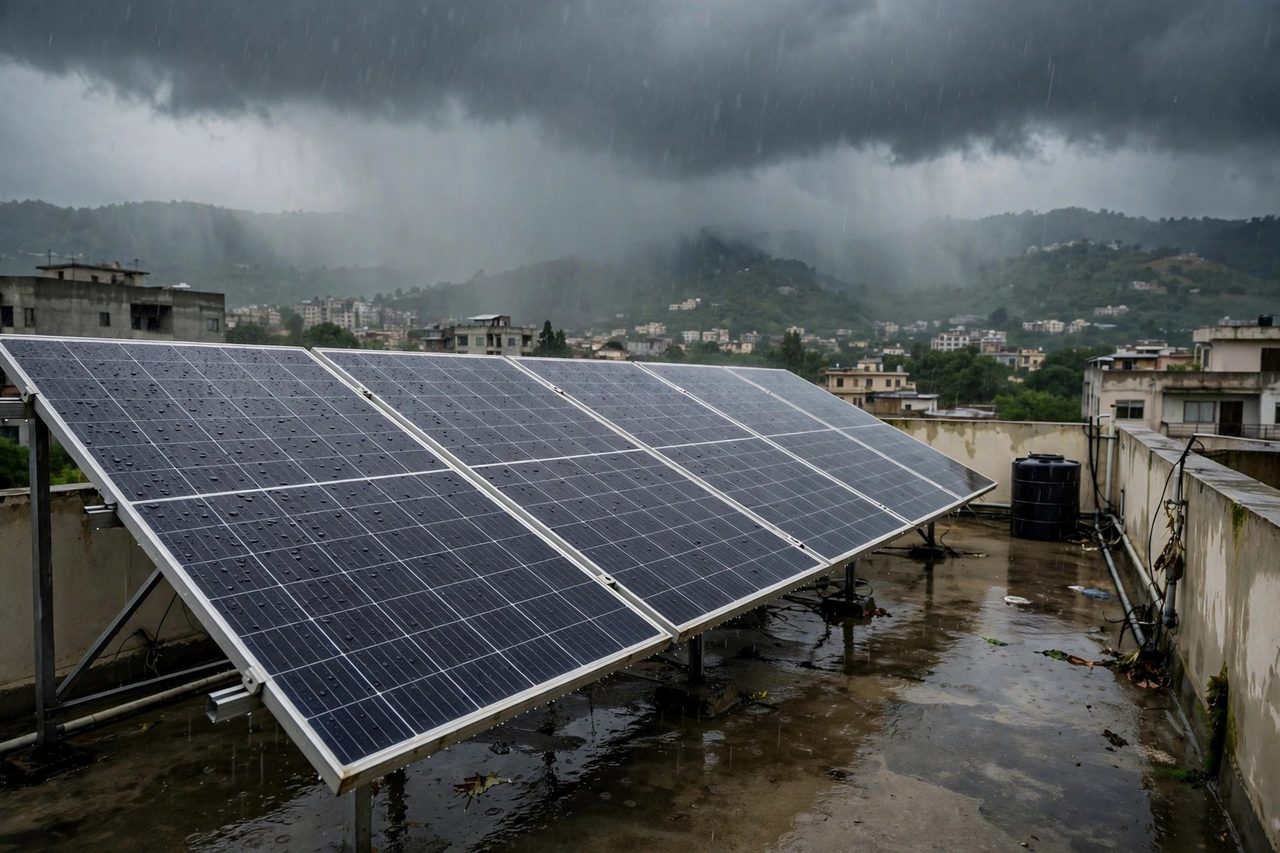
Rain washes the dust film off your panels for free, and cooler panel temperatures in cloudy weeks partly offset the lost sunshine. The real monsoon risk is water and wind: check that cables, joints and structure were finished properly before the season arrives.
Winter fog and short days
December and January bring the lowest units of the year. A hybrid system owner feels this in shorter battery backup, so winter is when careful load habits matter most: heavy appliances in the sunny middle of the day, essentials only on battery at night.
Plan on the year, judge on the year
Do not judge a system by one cloudy week. Compare your generation across seasons, keep the panels clean, and let the strong months balance the soft ones. That is exactly how net metering is designed to work.